When a customer taps their card at your point of sale terminal, a series of security processes activate in milliseconds to protect that transaction. Two of the most important technologies involved are end-to-end encryption and tokenization. Both serve the goal of POS payment security and data protection, but they work in fundamentally different ways and protect against different threats.
Understanding the distinction between encryption vs. tokenization in POS payments is not just a technical consideration. It is a practical one for any business that accepts card payments, because the security architecture you rely on directly affects your compliance obligations, your fraud liability, and your customers’ trust. As businesses evaluate What Are the Security Risks in POS Systems and How to Prevent Them, it becomes essential to understand how encryption and tokenization work together to protect sensitive payment data, reduce the risk of data breaches, and strengthen overall payment security.
What Is End-to-End Encryption in POS Payments?
The Core Concept
How Encryption Protects Payment Data
End-to-end encryption, often abbreviated as E2EE, is a security process that scrambles payment card data at the exact moment it is captured by the POS terminal and keeps it scrambled until it reaches the payment processor’s secure decryption environment. At no point during transit does the data exist in a readable form. If intercepted at any point between the terminal and the processor, the data is meaningless without the decryption key.
How the Encryption Process Works
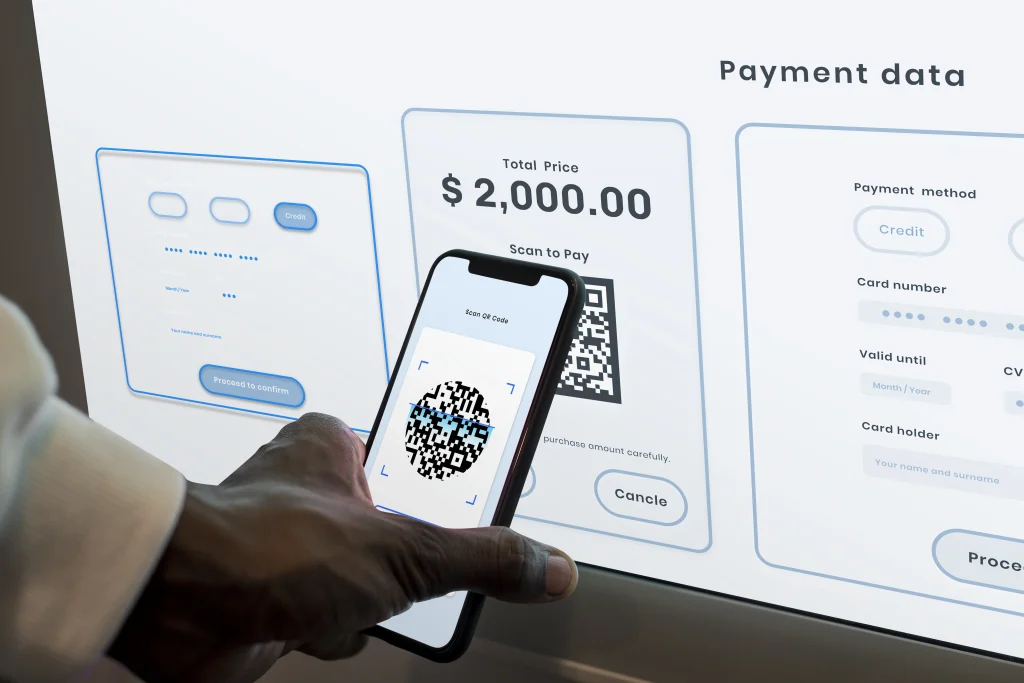
When a customer inserts, swipes, or taps a payment card, the terminal’s hardware encryption module immediately transforms the card data into ciphertext using a cryptographic key. This encrypted data travels through your network, through the payment gateway, and to the processor’s server. Only at the processor’s secure decryption environment, using a key that never travels with the data, is the original information restored for authorization processing.
What End-to-End Encryption Protects Against
The Specific Threats E2EE Addresses
- Network interception: attackers capturing data as it travels between the terminal and the processor
- Malware on the POS system: software capturing data as it passes through system memory
- Man-in-the-middle attacks: interception between any two points in the payment chain
- Compromised POS terminals: physical devices that have been tampered with to capture card reads
What Encryption Does Not Protect Against
End-to-end encryption protects data in transit. It does not protect data once it has been decrypted at the processor for authorization. It also does not protect stored cardholder data at the merchant level, which is where tokenization becomes critical.
What Is Tokenization in POS Payments?
The Core Concept
How Tokenization Works
Tokenization replaces sensitive payment card data with a non-sensitive substitute value called a token. The token is a randomly generated string of characters that has no mathematical relationship to the original card data and cannot be reverse-engineered to reveal it. The original card data is stored securely in a token vault maintained by the payment processor or tokenization provider. The merchant stores only the token.
The Token in Practice
When a customer completes a purchase, the payment processor authorizes the transaction using the real card data, returns a token to the merchant, and the merchant stores that token for future reference such as refunds or recurring billing. If the merchant’s systems are later compromised, the attacker finds only tokens with no inherent value. There is no card data to steal.
What Tokenization Protects Against
The Specific Threats Tokenization Addresses
- Merchant data breaches: attackers accessing stored transaction records find only worthless tokens
- Database theft: no card numbers exist in merchant systems to be extracted
- Insider threats: employees with database access cannot access real card numbers
- Repeated fraud from a single breach: a compromised token cannot be used to generate new fraud
Encryption vs. Tokenization: The Key Differences
| Factor | End-to-End Encryption | Tokenization |
| What it protects | Data in transit between terminal and processor | Data at rest in merchant systems |
| How it works | Scrambles data using a cryptographic key | Replaces data with a non-sensitive substitute value |
| Where the real data goes | Decrypted at the processor for authorization | Stored securely in the token vault |
| Merchant stores | Encrypted ciphertext during transit | Token only, no real card data |
| Reversible? | Yes, with the correct decryption key | No, tokens cannot be reversed to reveal card data |
| Primary threat addressed | Interception during transmission | Compromise of stored merchant data |
| PCI DSS impact | Reduces scope during transmission | Significantly reduces scope for stored data |
Why POS Payment Security Requires Both Technologies
The Complementary Nature of E2EE and Tokenization
Two Different Vulnerability Windows
Card payment data faces two distinct vulnerability windows: while it is moving between the terminal and the processor, and while it is stored in merchant systems for future reference. Encryption vs. tokenization is not an either/or question because each technology addresses a different vulnerability. A POS payment security architecture that relies on only one of the two leaves the other window open. This is especially important when evaluating Cloud v. On-premise Point of Sale Systems: What is Right for You?, as both deployment models require strong payment security measures to protect sensitive cardholder data during transmission and storage.
The Complete Security Chain
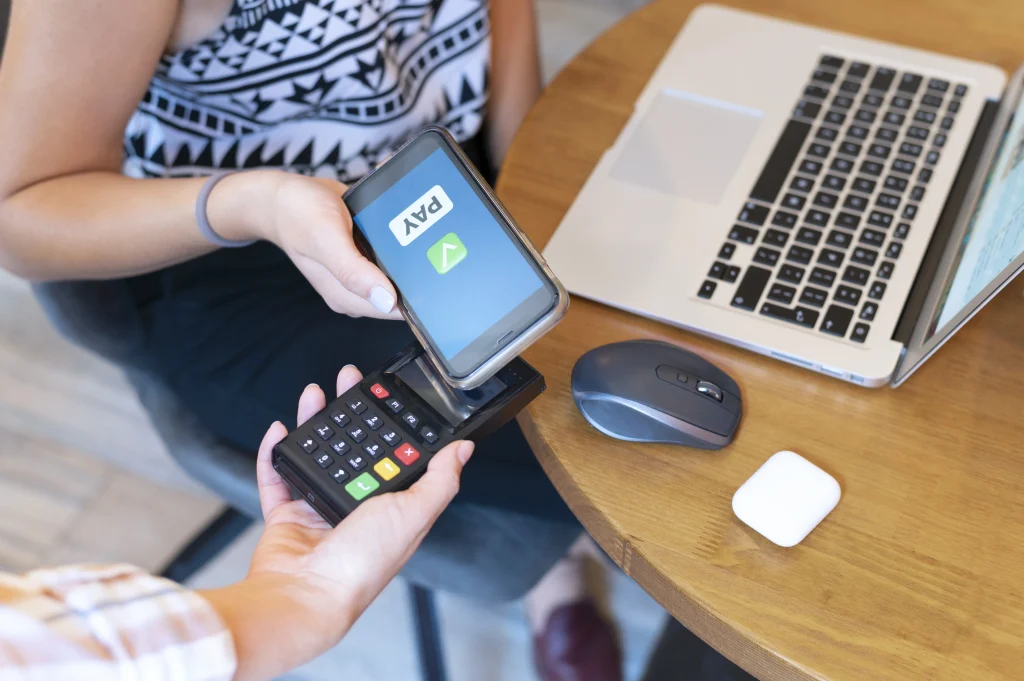
Effective POS payment security and data protection uses both technologies in sequence. End-to-end encryption protects the data from the moment it is captured until it reaches the processor. At the processor, the real data is used for authorization, and a token is returned to the merchant for storage. From that point forward, no real card data exists in the merchant’s environment.
PCI DSS Compliance and These Technologies
How E2EE and Tokenization Reduce Compliance Scope
PCI DSS compliance requires merchants to protect cardholder data throughout their environments. Both encryption and tokenization directly reduce the scope of what needs to be protected and therefore the complexity and cost of compliance. End-to-end encryption reduces the transmission scope. Tokenization reduces the storage scope. Together, they are among the most effective tools available for simplifying PCI DSS compliance obligations for merchants.
Choosing the Right POS Payment Security Setup
What to Look for in a POS System
Security Features That Indicate Strong Protection
- P2PE (Point-to-Point Encryption) certification from PCI SSC: confirms the encryption implementation meets the highest security standards
- Network tokenization support: tokens issued by card networks like Visa and Mastercard offer additional fraud protection
- End-to-end encryption covering all payment acceptance modes including chip, tap, and swipe
- Regular security updates and firmware management to address emerging vulnerabilities
- Clear documentation of how cardholder data flows through the system from capture to settlement
Questions to Ask Your POS Provider
- Does your system support P2PE-certified end-to-end encryption?
- How is tokenization implemented and who manages the token vault?
- What happens to cardholder data after a transaction is authorized?
- How does your security architecture affect my PCI DSS compliance obligations?
- What breach notification and liability protections are included in the processing agreement?
Final Thoughts
The encryption vs. tokenization question in POS payment security is not a competition between two alternatives. It is a description of two complementary protections that together create a robust security architecture for card payment acceptance. Understanding how each works and what each protects against helps you evaluate your current POS setup and ask the right questions of any new provider.
POS payment security and data protection are not areas where partial solutions are adequate. Both the transmission and storage vulnerability windows need to be addressed, and both technologies play a specific role in doing so.
POS Circle provides payment solutions built on strong security foundations. If you want to understand how your current or planned POS setup handles encryption and tokenization, reach out to us today. We are here to help you build a payment environment your customers can trust.
FAQs
1. What is the difference between encryption and tokenization in POS payments?
Encryption scrambles data during transmission so it cannot be read if intercepted. Tokenization replaces stored card data with a non-sensitive token so that real card numbers never reside in merchant systems. Both address different vulnerability windows in the payment process.
2. Do I need both encryption and tokenization for POS payment security?
Yes. Encryption protects data in transit and tokenization protects stored data. A POS security architecture that uses only one of the two leaves the other vulnerability window unaddressed. Both technologies working together create comprehensive cardholder data protection.
3. What is a payment token and can it be used to steal card data?
A payment token is a randomly generated substitute value with no mathematical relationship to the original card data. It cannot be reverse-engineered to reveal card numbers. If a merchant’s systems are breached, attackers find only tokens with no inherent value.
4. How does tokenization affect PCI DSS compliance?
Tokenization significantly reduces PCI DSS compliance scope by eliminating real cardholder data from merchant storage environments. When merchants store only tokens rather than card numbers, the range of systems that must meet PCI DSS requirements is substantially smaller.
5. What is P2PE and how does it relate to end-to-end encryption?
P2PE stands for Point-to-Point Encryption and is a specific PCI SSC-certified implementation standard for end-to-end encryption in payment systems. P2PE certification confirms that the encryption implementation meets rigorous security requirements and can significantly reduce a merchant’s PCI DSS compliance burden.